- Identify a stereotype or generalization about yourself or someone you know – don’t name the other person without his/her explicit permission – that you’ve seen in the media. This might include a stereotype about gender identity, culture/heritage, race, profession, health, hobbies, family structure, etc.
One stereotype about baristas is that the ones who have piercings and dyed hair, or appear generally queer in some way, make the best drinks. I myself am a barista and I do have piercings, as well as dyed hair. I look more alternative in my fashion and general style so a lot of people tell me I look queer, and they would be right. I have been a barista for over 6 years now, so I get a lot of regulars who say I make the best drinks, but this of course has nothing to do with my appearance, this comes from years of experience.
- Describe the media construction and explain, in detail, why you believe this construction is accurate or inaccurate (or some of each) in the context of your Key Questions: Is someone’s perspective or story missing? Is information missing? Is context missing? What information/biases/etc. are overt? Implied?
It is quite common to walk into a coffee shop and see staff with alternative or queer styles. This is usually because the job itself is culturally attractive to alternative and queer people, as it gives them a safe space to work where they can be themselves, and they are allowed to express themselves through their appearance. Many office jobs or other retail jobs won’t hire people with colored hair or too many facial piercings, but many coffee shops don’t have these rules. Many queer people also find solace in these places because they feel a sense of belonging when there are other queer folks to work with that understand them and can relate.
There have been memes on social media circulating about non-binary baristas or baristas with blue hair and a septum piercing and people saying that if they see them making their drink, they know it will be good. Of course, someone’s appearance has nothing to do with how well they make a drink, and there are plenty of baristas who are cisgendered or that have natural colored hair that make good drinks as well.
- Provide at least two examples of this construction in media (embed links and/or screenshots) and describe how those examples perpetuate the stereotype, norm, or generalization.
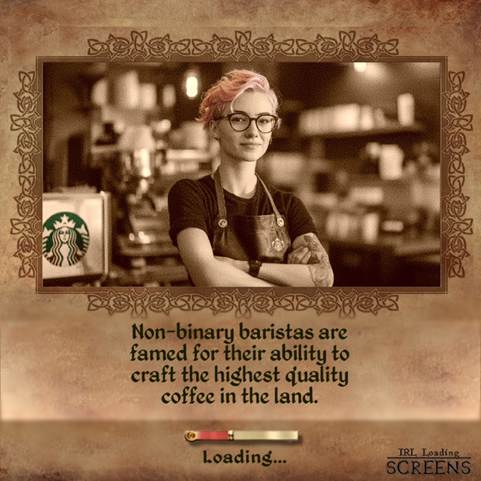
This fake loading screen meme meant to resemble the tips and tricks aspect that some video games have, makes a joke about how non-binary baristas make the best drinks.
This TikTok is a meme about someone who walks into a coffee shop and is upset when they don’t see the barista with a septum piercing, purple hair, and a they/them pin, and the caption reads “none of yall gonna make an oat milk lavender honey latte like the legend themselves”.
- Could this construction be harmful to you and/or others? If so, can you think of how someone might benefit from this construction?
This stereotype has the power to harm one group while benefiting another. People who do not fall into this category of non-binary, queer, or alternative looking may deal with people thinking they don’t know how to do their jobs or believing that they genuinely don’t make good drinks. This could affect how customers treat different employees, even if they do make good drinks, as they may have preconceived notions and assumptions about the baristas based on their appearance. Discrimination based on anyone’s appearance is never good, especially somewhere people may go to for a safe space.
It could end up benefiting people who fit these criteria, as it paints them in a good light and perpetuates the generalization that people who look or present this way automatically will make good drinks. Customers could decide to tip more based off of these assumptions which could also work out in the barista’s favor. On the other hand, It could also be detrimental to those who are inexperienced at making drinks, and it could put a lot of pressure on new employees who might not know a lot yet.
 Teagan Okutman's Blog
Leave a comment